The Glass Laboratory: Drug Testing in Vitro
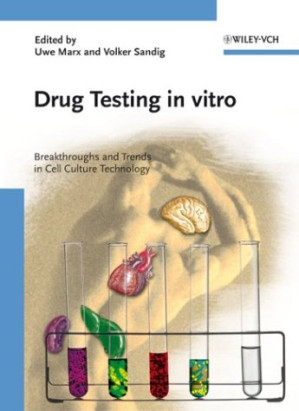
For decades, the pharmaceutical industry relied on a brutal, slow, and highly controversial method for testing drug toxicity: animal testing. Beyond the ethical concerns, animal models are often terrible predictors of human biology; a drug that is perfectly safe for a rat might instantly kill a human being. Drug Testing in Vitro is the definitive, highly advanced manual detailing the massive scientific revolution designed to replace the laboratory mouse with the silicon chip and the glass petri dish. For toxicologists, cell biologists, and R&D executives, this volume provides the critical blueprints for testing drugs entirely on isolated human cells.
Eliminating the Animal Model in Preclinical Toxicology
The opening chapters of this book establish the massive scientific and financial advantages of In Vitro (in glass) testing. The authors rigorously explain that testing a drug on a million isolated human liver cells in a laboratory dish is infinitely faster, cheaper, and more biologically accurate than feeding that drug to a dog. The text details the massive industry shift towards these technologies, driven by both ethical pressure and the desperate need to accelerate drug discovery.
Advanced Cell Culture and Tissue Engineering
The core of the textbook provides a masterclass in modern cell biology. The authors exhaustively detail the incredibly difficult process of keeping human cells alive outside the body. Readers will learn the strict, sterile protocols for establishing “immortalized” cell lines. Furthermore, the text pushes into the frontier of 3D Tissue Engineering, explaining how scientists coax cells to grow into microscopic, functioning mini-organs (organoids) that perfectly mimic human lung or liver tissue.
High-Throughput Screening (HTS) Assays
This is a fiercely practical guide to massive data generation. The book details the use of High-Throughput Screening (HTS). The authors explain how robotic arms can simultaneously drop 10,000 different experimental drugs into 10,000 microscopic wells containing human cancer cells. By utilizing advanced fluorescent dyes and laser scanners, researchers can instantly identify the one chemical that successfully kills the cancer without harming healthy tissue.
Microfluidics and “Organ-on-a-Chip” Technology
The book pushes into the absolute cutting edge of biomedical engineering: “Organ-on-a-Chip” technology. The authors detail how scientists use advanced microfluidics to connect a microscopic artificial liver, a microscopic artificial heart, and artificial lungs on a single silicon chip. By pumping a drug through this interconnected “human-on-a-chip,” researchers can observe exactly how the drug is metabolized by the liver and whether those metabolites will subsequently damage the heart.
Validating In Vitro Data for Regulatory Approval (FDA/EMA)
The final chapters address the ultimate hurdle: the FDA. A brilliant in vitro test is useless if the regulatory agencies refuse to accept the data. The authors provide exhaustive guidance on validating these new laboratory assays, teaching scientists exactly how to prove to the FDA and the EMA that their artificial “liver-on-a-chip” is a statistically superior, legally acceptable replacement for a traditional animal toxicity study.
Frequently Asked Questions (FAQs)
Does this book cover stem cell technologies?
Yes, it heavily features the use of induced Pluripotent Stem Cells (iPSCs), detailing how scientists can take a patient’s skin cell, revert it into a stem cell, and grow it into a beating human heart cell for hyper-personalized drug testing.
Is a strong background in bioengineering required?
Absolutely. This is an advanced professional text requiring a profound understanding of cell biology, microfluidics, and complex assay development.
Who is the primary audience?
It is the absolute gold standard for Ph.D. toxicologists, preclinical R&D scientists, and biomedical engineers developing alternative testing models.
Conclusion
Drug Testing in Vitro proves that the future of pharmaceutical safety is microscopic, digital, and human-based. It is an indispensable guide to the end of the animal testing era. By mastering the advanced cell culture techniques, robotic screening, and revolutionary organ-on-a-chip technologies detailed in this volume, scientists can radically accelerate drug development while achieving unprecedented levels of safety and scientific accuracy.