
The Guardians of the Pipeline: FDA in the Twenty-First Century
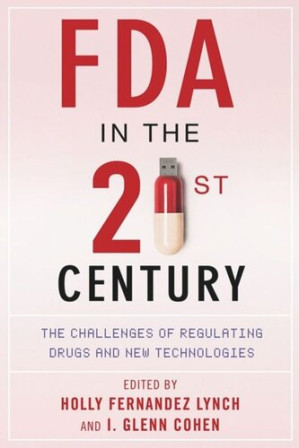
The Food and Drug Administration (FDA) is arguably the most powerful public health agency on Earth. It holds the absolute authority to approve a life-saving cancer drug or to ban a multi-billion-dollar product overnight. FDA in the Twenty-First Century: The Challenges of Regulating Drugs and New Technologies is a profound, highly analytical deconstruction of this colossal agency. For regulatory affairs specialists, health law attorneys, and biopharmaceutical executives, this volume explores how the FDA is struggling to adapt its 20th-century laws to the terrifyingly rapid advancement of 21st-century science.
The Evolution of Global Drug Regulation
The opening chapters of this book establish the historical foundation of the FDA. The authors detail how the agency was built on reaction to tragedy (like the Elixir Sulfanilamide disaster and the Thalidomide crisis). The text rigorously explains that the FDA’s core mandate is a terrifying balancing act: demanding absolute, mathematically proven safety before a drug is approved, while desperate patients simultaneously demand immediate access to unproven, experimental cures.
Balancing Accelerated Approval with Absolute Patient Safety
The core of the textbook provides a masterclass in modern regulatory pathways. The authors exhaustively analyze the “Accelerated Approval” program. They detail the extreme ethical conflict of approving an Alzheimer’s or cancer drug based entirely on “surrogate endpoints” (like a blood test) rather than waiting five years to see if the patient actually lives longer. The text explores the devastating consequences when a rapidly approved drug is later found to be fatally toxic.
Regulating the Frontier: Gene Editing and CRISPR
This is a fiercely modern guide to the bleeding edge of science. The book tackles the FDA’s absolute nightmare: regulating human genetic engineering. The authors detail the immense legal and ethical complexities of CRISPR technology. How does a government agency regulate a drug that physically, permanently alters a human embryo’s DNA? The text explores the panicked rush to create entirely new legal frameworks to control this god-like technology.
The Chaos of Digital Health and Software as a Medical Device (SaMD)
The book pushes into the digital revolution. The authors detail how the FDA is scrambling to regulate “Software as a Medical Device” (SaMD). If an artificial intelligence algorithm on an iPhone diagnoses a patient with melanoma, and the algorithm is wrong, who is legally responsible? The text provides a rigorous breakdown of the FDA’s attempt to regulate constantly updating, machine-learning software using laws that were originally designed to regulate physical pills and scalpels.
Post-Market Surveillance and the Black Box Warning
The final chapters address the reality of a drug post-approval. The authors explain that clinical trials are too small to catch everything. They detail the massive, data-driven world of “Phase IV” post-market surveillance. Readers will learn how the FDA uses massive databases to detect rare, fatal side effects once the drug is released to millions of people, resulting in the terrifying, legally disastrous “Black Box Warning” or total market withdrawal.
Frequently Asked Questions (FAQs)
Is this a law book or a science book?
It is the absolute intersection of both. It requires an understanding of complex pharmacology to understand the regulatory laws that govern it.
Does it cover the regulation of medical devices and implants?
Yes, it features critical sections on the often-criticized 510(k) clearance pathway, detailing how faulty hip implants and surgical meshes reach the market.
Who is the primary audience?
It is the mandatory reference for Directors of Regulatory Affairs, FDA policy analysts, and pharmaceutical compliance officers.
Conclusion
FDA in the Twenty-First Century is a vital exploration of the absolute limits of government control. It proves that science will always outpace the law. By mastering the complex regulatory frameworks, the bioethical nightmares, and the legal strategies detailed in this volume, professionals can successfully navigate the most powerful regulatory agency on Earth, ensuring revolutionary cures actually reach the patients who need them.