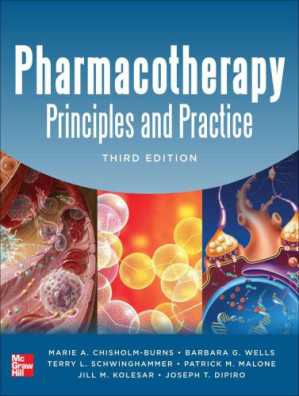
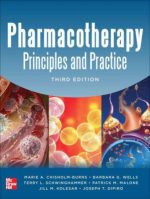
The Blueprint for Patient Care: Pharmacotherapy Principles and Practice (3rd Edition)
Knowing the chemical structure of a drug makes you a chemist. Knowing how that drug interacts with a specific disease to save a human life makes you a clinical pharmacist. Pharmacotherapy Principles and Practice (3rd Edition) is the definitive, highly structured manual detailing the absolute transition from basic science to applied clinical care. For PharmD students and practicing clinical pharmacists, this massive volume provides the critical, evidence-based blueprints required to design, implement, and monitor complex medication regimens for critically ill patients.
Translating Science into Patient Outcomes
The opening chapters of this textbook aggressively destroy the concept of the pharmacist as a mere dispenser of pills. The authors establish the pharmacist as the ultimate medication expert on the interdisciplinary medical team. The text demands that the clinician understand not just the pharmacology of the drug, but the complete pathophysiology of the disease state, ensuring the selected medication perfectly aligns with the patient’s specific biological failure.
Disease-State Management and Evidence-Based Guidelines
The core of the textbook provides a masterclass in guideline-driven medicine. The authors do not rely on opinion; they rely on massive, global clinical trials. Readers will explore highly structured chapters covering every major disease state (from Hypertension to Major Depressive Disorder). The text provides the exact, step-by-step treatment algorithms mandated by organizations like the American Heart Association (AHA) and the American Diabetes Association (ADA).
Developing Individualized Care Plans
This is a fiercely practical guide to clinical problem-solving. The book tackles the reality that real patients do not fit perfectly into a textbook algorithm. The authors teach the clinician how to develop an individualized care plan. They detail how to adjust a standard treatment guideline for a patient who is simultaneously suffering from kidney failure, severe allergies, and profound financial limitations that prevent them from buying the most expensive, newest drug.
The Role of the Pharmacist on the Interdisciplinary Team
The book pushes deeply into the reality of hospital practice. The authors detail exactly how the clinical pharmacist integrates with the attending physicians and critical care nurses. They provide the rigorous protocols for conducting “medication reconciliation” (preventing lethal errors during hospital admission) and conducting highly structured, pharmacist-led rounds to proactively stop dangerous drug interactions before they reach the patient.
Mastering Patient Counseling and Adherence
The final chapters address the ultimate hurdle: the patient. A brilliant care plan is useless if the patient refuses to swallow the pill. The authors provide exhaustive guidance on patient counseling. They teach the clinician exactly how to explain complex disease states to a terrified patient, how to manage the expectation of side effects, and how to utilize advanced behavioral strategies to ensure long-term medication adherence.
Frequently Asked Questions (FAQs)
How does this differ from DiPiro’s Pharmacotherapy?
This book is the highly streamlined, more accessible “Principles and Practice” version. It is designed to be slightly more digestible for students, focusing heavily on core concepts and immediate clinical application rather than exhaustive, encyclopedic trial data.
Is the 3rd Edition (2013) still clinically accurate?
The core pathophysiological principles and foundational drug classes remain identical. However, for actively treating patients with modern biologics or new targeted therapies, clinicians must consult current, live clinical guidelines.
Who is the primary audience?
It is the absolute, core curriculum textbook for P2 and P3 PharmD students entering their rigorous therapeutics courses and preparing for clinical rotations.
Conclusion
Pharmacotherapy Principles and Practice proves that the ultimate goal of pharmacology is the patient’s survival. It is an indispensable guide to the reality of clinical practice. By mastering the evidence-based treatment algorithms, the complex disease-state management, and the rigorous care plan development detailed in this volume, pharmacy students transform into powerful clinical practitioners, ready to take their place at the forefront of modern patient care.