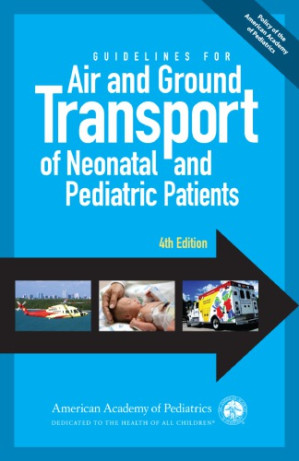

Critical Care in Motion: Guidelines for Air and Ground Transport of Neonatal and Pediatric Patients, 4th Edition
The transport of a critically ill neonate or child is one of the most perilous phases of their care. Subjecting an unstable pediatric patient to the physical stresses of motion, altitude, and confined spaces requires extraordinary clinical expertise and logistical precision. Guidelines for Air and Ground Transport of Neonatal and Pediatric Patients (4th Edition) is the definitive, authoritative manual endorsed by the AAP. This volume provides the exact, highly technical blueprints required to execute safe, efficient, and life-saving transport operations.
Mastering the Logistics of High-Acuity Pediatric Transport
The core philosophy of this text is that the transport environment is an intensive care unit in motion. The authors aggressively detail the physics of transport—Boyle’s law, acceleration/deceleration forces, vibration, and noise—and exactly how these factors physiologically impact the fragile pediatric patient. They dictate the rigorous protocols required to mitigate these risks before the patient ever leaves the referring facility.
Navigating Equipment, Personnel, and Vehicle Selection
The book provides a masterclass in operational logistics. It dictates the exact criteria for selecting the appropriate mode of transport (ground ambulance, rotor-wing, or fixed-wing aircraft) based on patient acuity, distance, and weather. It provides exhaustive details on the specialized equipment required—from pediatric transport incubators and ventilators to point-of-care laboratory testing—and the specific competencies required of the transport team members.
Managing Hypoxia, Hypothermia, and Hemodynamic Instability En Route
This is a fiercely practical guide to dynamic critical care. The authors provide rigid clinical algorithms for managing crises in confined spaces. The text dictates exactly how to anticipate and manage hypoxia at altitude, how to aggressively prevent hypothermia in neonates, and how to execute complex interventions (like intubation or needle thoracostomy) while in a moving vehicle.
Integrating Stabilization Protocols with Continuous Monitoring
The final value of this reference is its focus on pre-transport stabilization. The text provides the exact S.T.A.B.L.E. guidelines and advanced resuscitation protocols required to prepare the patient for the journey. It dictates how to establish secure airways, obtain reliable vascular access, and initiate neuroprotective strategies before the transport team assumes responsibility.
Frequently Asked Questions (FAQs)
Does this edition include guidelines for specialized transports?
Yes, it features highly detailed protocols for transporting patients requiring ECMO (Extracorporeal Membrane Oxygenation), nitric oxide therapy, and those with severe congenital heart disease.
Is there information on the legal and regulatory aspects of transport?
Absolutely. It provides essential guidance on EMTALA compliance, informed consent, documentation standards, and the rigorous quality improvement metrics required of specialized transport programs.
Who is the primary audience?
It is the absolute, mandatory operational manual for Pediatric and Neonatal Transport Teams (Nurses, Respiratory Therapists, Physicians), referring Emergency Room Physicians, and Transport Program Directors.
Conclusion
Guidelines for Air and Ground Transport proves that moving critically ill children requires an uncompromising command of transport physics, advanced resuscitation, and flawless logistical coordination. It is the indispensable bedrock of pediatric transport medicine. By mastering the stabilization protocols, the equipment requirements, and the emergency algorithms detailed in this authoritative volume, teams ensure the safe passage of the most vulnerable patients.