

The Vital Surrogate: Mouse Models for Drug Discovery
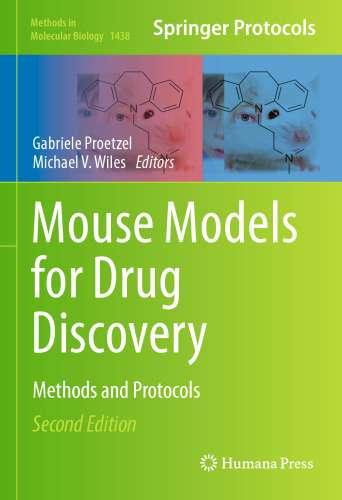
Before a new pharmaceutical drug can legally be given to a human being, it must be rigorously tested to prove it works and to guarantee it will not cause catastrophic harm. Because testing experimental, highly toxic chemicals on humans is ethically impossible, the entire global pharmaceutical industry relies on a vital biological surrogate. Mouse Models for Drug Discovery is a highly advanced, fiercely technical manual detailing the incredibly complex science of in vivo testing. For preclinical toxicologists, genetic engineers, and industrial pharmacologists, this volume provides the absolute blueprints for utilizing the mouse to predict human safety and efficacy.
The Indispensable Role of In Vivo Testing
The opening chapters of this book destroy the misconception that cell cultures and computer models can replace animal testing. The authors explain that while a computer can predict if a drug binds to a receptor, only a living, breathing organism with a beating heart, a functional liver, and a complex immune system can prove if the drug actually cures the disease without triggering lethal systemic toxicity. The mouse remains the absolute cornerstone of preclinical data required by the FDA.
Transgenic and Knockout Mice: Engineering Human Disease
The core of the textbook provides a masterclass in advanced genetic engineering. A normal mouse does not get Alzheimer’s disease or human breast cancer. Therefore, scientists must engineer them to do so. The text rigorously details the creation of “Transgenic” mice (where human disease genes are artificially inserted into the mouse genome) and “Knockout” mice (where specific mouse genes are permanently deleted). This allows researchers to test an Alzheimer’s drug on a mouse that is physically growing human amyloid plaques in its brain.
Xenograft Models in Oncology Drug Development
This is a critical textbook for cancer researchers. The authors provide exhaustive protocols for Patient-Derived Xenograft (PDX) models. They explain the complex process of taking a biopsy of a live human tumor, surgically implanting it into a heavily immunocompromised mouse (so the mouse’s body doesn’t reject the human tissue), and allowing the human tumor to grow. This creates an incredibly accurate biological avatar, allowing scientists to test dozens of highly toxic chemotherapy combinations on the mouse to find the perfect cure for that specific human patient.
Translating Murine Pharmacokinetics to Human Clinical Trials
A mouse is not a small human; its metabolism is vastly different. The book provides a rigorous analysis of cross-species pharmacokinetics. It teaches pharmacologists how to mathematically scale the data. If a drug clears a mouse’s liver in 20 minutes, the authors provide the complex allometric scaling equations required to accurately predict whether that same drug will last 2 hours or 2 days in a human patient, a calculation that is critical for determining the starting dose in a Phase I clinical trial.
The Ethical Framework and the “3 Rs”
The final chapters address the profound moral responsibility of animal research. The authors strictly enforce the “3 Rs” (Replacement, Reduction, Refinement). They detail the rigorous ethical protocols required by Institutional Animal Care and Use Committees (IACUC), ensuring that scientists use the absolute minimum number of animals required to achieve statistical significance, and that pain and distress are aggressively minimized.
Frequently Asked Questions (FAQs)
Does this book cover non-human primate testing?
No, it is strictly focused on murine (mouse) models, which represent the vast majority (over 90%) of mammalian testing in early drug discovery.
Is this a theoretical book or a laboratory manual?
It functions heavily as a practical manual, providing highly detailed, step-by-step protocols for dosing techniques (oral gavage, IV injection) and blood sampling in mice.
Who is the primary audience?
It is the ultimate reference for Ph.D. toxicologists, principal investigators in the pharmaceutical industry, and veterinary pathologists managing preclinical research facilities.
Conclusion
Mouse Models for Drug Discovery is a profound acknowledgment of the biological foundation of modern medicine. It proves that every life-saving drug in the modern pharmacy owes its existence to preclinical animal models. By mastering the advanced genetic engineering and rigorous scaling mathematics detailed in this volume, scientists can successfully translate the biological reactions of a mouse into safe, highly effective cures for human disease.