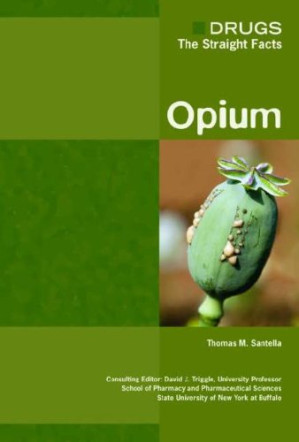
The Flower of Joy and Sorrow: Opium (Drugs: The Straight Facts)
Few substances in human history have caused as much profound healing and catastrophic destruction as the sap of the Papaver somniferum plant. Opium (Drugs: The Straight Facts) is an uncompromising, highly accessible, and deeply scientific exploration of the world’s most infamous flower. For students, educators, and public health advocates, this volume strips away the mythology and provides the absolute, unvarnished truth about the botany, chemistry, and horrifying societal impact of the drug that gave birth to the modern opioid crisis.
Unmasking the World’s Oldest Narcotic
The opening chapters of this book establish the massive historical footprint of Opium. The authors detail how ancient civilizations, from the Sumerians to the Greeks, utilized the raw sap of the poppy pod as the ultimate medical cure-all, treating everything from severe dysentery to battlefield amputations. The text explores the profound paradox of the drug: it is a miraculous, God-given painkiller that possesses a near-demonic ability to enslave the human mind.
The Botany and Chemistry of the Poppy
The core of the book provides a highly readable breakdown of natural product chemistry. The authors detail the exact agricultural process of scoring the poppy pod to bleed the raw latex. Readers will learn the specific, highly complex alkaloids hidden inside that latex. The text explains how raw Opium is essentially a chemical cocktail containing Morphine (the ultimate painkiller) and Codeine (the ultimate cough suppressant), providing the absolute foundation for modern pain medicine.
Understanding the Opiate Receptor System
This is a fiercely clear guide to neurobiology. The book tackles the terrifying mechanics of addiction. The authors explain exactly how the morphine molecule crosses the blood-brain barrier and physically locks into the brain’s mu-opioid receptors. They detail how this chemical lock-and-key mechanism violently suppresses pain, induces profound euphoria, and eventually rewires the brain’s survival circuitry, making the addict feel like they will literally die if they do not secure the next dose.
The Historical Impact of the Opium Wars
The book pushes beyond chemistry to explore massive geopolitical consequences. The authors detail the devastating history of the Opium Wars in the 19th century. They explain how the British Empire deliberately weaponized the drug, smuggling thousands of tons of Opium into China to balance trade deficits, triggering a massive, continent-wide addiction crisis that ultimately resulted in war and the collapse of the Chinese imperial system.
The Evolution from Raw Opium to Synthetic Fentanyl
The final chapters connect ancient history to the modern crisis. The authors explain how chemists took the natural morphine from the poppy and chemically altered it to create Heroin—a drug initially sold as a “non-addictive” cure for morphine addiction. The text traces this terrifying chemical evolution all the way to modern synthetic opioids like Fentanyl, proving that as our chemistry became more advanced, our drugs became infinitely more lethal.
Frequently Asked Questions (FAQs)
Is this book appropriate for high school health classes?
Yes. It is specifically designed to provide highly rigorous, objective, and scientifically accurate information in an accessible format, avoiding scare tactics in favor of hard pharmacological facts.
Does it cover the legal medical use of opiates?
Absolutely. It rigorously separates the devastating reality of street addiction from the absolute medical necessity of utilizing opioid derivatives in modern surgical and palliative care.
Who is the primary audience?
It is essential reading for health educators, addiction counselors, and anyone seeking a clear, factual understanding of the roots of the global opioid epidemic.
Conclusion
Opium (Drugs: The Straight Facts) is a vital, uncompromising educational tool. It proves that to fight an epidemic, you must first understand the enemy. By mastering the fascinating botany, the terrifying neurobiology, and the devastating history detailed in this volume, readers gain the objective, scientific perspective required to navigate the complex reality of addiction and modern pain management.