
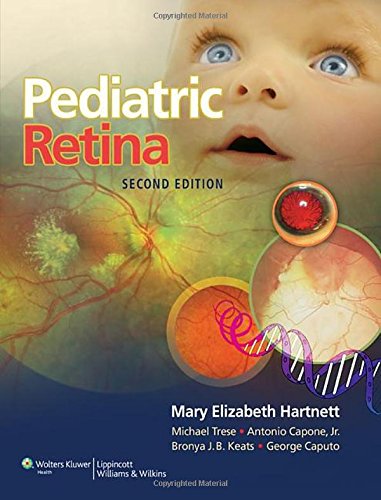


Preserving Vision: Pediatric Retina (2nd Edition)
The pediatric retina is a uniquely fragile and dynamically developing structure. Diseases that afflict it—whether congenital, genetic, or acquired—demand rapid, highly specialized intervention to prevent irreversible blindness in a patient with an entire lifetime ahead. Pediatric Retina (2nd Edition) is the definitive, fiercely technical surgical and medical atlas designed to confront these devastating conditions. This volume provides the exact blueprints required to diagnose complex anomalies and execute the most delicate vitreoretinal surgeries on the smallest of eyes.
Mastering the Complexities of Pediatric Vitreoretinal Disease
The core philosophy of this text is absolute precision in the face of microscopic pathology. The authors aggressively detail the distinct anatomical and physiological differences between the adult and infant eye. They dictate exactly how the tenacious vitreoretinal adhesions in a child complicate surgical intervention, requiring modified techniques and specialized, small-gauge instrumentation to avoid catastrophic iatrogenic retinal breaks.
Navigating Retinopathy of Prematurity (ROP) and Congenital Anomalies
The book provides a masterclass in the most urgent pediatric retinal conditions. It dictates the exact clinical pathways for screening, staging, and treating Retinopathy of Prematurity (ROP), providing exhaustive details on when to utilize laser photocoagulation versus intravitreal anti-VEGF injections. It provides rigid diagnostic and surgical protocols for managing congenital anomalies such as Persistent Fetal Vasculature (PFV), Coats’ Disease, and Familial Exudative Vitreoretinopathy (FEVR).
Managing Pediatric Retinal Detachments and Trauma
This is a fiercely practical guide to complex ocular reconstruction. The authors provide rigid frameworks for managing pediatric retinal detachments, which are often insidious in onset and anatomically complex. The text dictates exactly how to approach the surgical repair of rhegmatogenous, tractional, and exudative detachments in children, heavily emphasizing the management of severe ocular trauma and the prevention of proliferative vitreoretinopathy (PVR).
Integrating Advanced Imaging with Micro-Surgical Techniques
The final value of this reference is its integration of cutting-edge technology. The text provides the exact protocols for utilizing wide-field pediatric angiography and handheld optical coherence tomography (OCT) to accurately map pathology in uncooperative infants. It dictates how to integrate these imaging findings directly into the surgical plan.
Frequently Asked Questions (FAQs)
Does this book cover inherited retinal dystrophies?
Yes, it features critical sections on the diagnosis of genetic conditions like Leber Congenital Amaurosis (LCA) and Retinitis Pigmentosa, detailing the rapidly evolving landscape of ocular gene therapy.
Is the medical management of pediatric uveitis addressed?
Absolutely. It provides exhaustive details on the diagnosis and immunosuppressive management of posterior segment inflammation and pars planitis in children.
Who is the primary audience?
It is the absolute, mandatory surgical atlas for Vitreoretinal Surgeons, Pediatric Ophthalmologists, and Ophthalmic Geneticists.
Conclusion
Pediatric Retina proves that preserving sight in a child requires an uncompromising command of developmental ocular anatomy, a mastery of micro-surgical technique, and the ability to rapidly integrate advanced imaging. It is the indispensable bedrock of pediatric retinal care. By mastering the diagnostic algorithms, the laser protocols, and the surgical approaches detailed in this essential volume, surgeons can alter the visual trajectory of their youngest patients.


