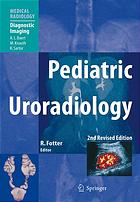

Diagnostic Precision: Pediatric Uroradiology (Medical Radiology) – 2nd Edition
Congenital anomalies of the kidney and urinary tract (CAKUT) represent a significant portion of pediatric pathology, often presenting subtly before causing irreversible renal damage. Accurate diagnosis relies entirely on highly specialized imaging interpreted by experts who understand the dynamic development of the child’s genitourinary system. Pediatric Uroradiology (Medical Radiology) – 2nd Edition is the definitive, fiercely detailed masterwork designed for this precise task. This volume provides the rigorous visual criteria and protocol guidelines required by radiologists to accurately map the urinary tract and guide life-saving urological interventions.
Mastering the Imaging of the Pediatric Genitourinary Tract
The core philosophy of this text is that the developing kidney is not merely a small adult kidney. The authors aggressively detail the embryological basis of congenital defects and how they manifest on various imaging modalities. They dictate exactly how normal developmental stages—such as fetal lobulation or prominent pyramids—can mimic pathology, ensuring that normal variants are not misdiagnosed as disease.
Navigating Congenital Anomalies and Renal Tumors
The book provides a masterclass in interpreting complex urological defects. It dictates the exact radiological presentations of high-stakes conditions like posterior urethral valves (PUV), ureteropelvic junction (UPJ) obstruction, and the vast spectrum of duplex collecting systems. Crucially, it provides exhaustive guidelines for differentiating pediatric renal masses, dictating the specific imaging characteristics that distinguish a Wilms tumor from a neuroblastoma.
Managing Modality Selection: Ultrasound, VCUG, and MRI
This is a fiercely practical guide to minimizing radiation exposure (ALARA). The authors provide rigid algorithms for modality selection. The text dictates exactly when advanced, high-resolution ultrasound is sufficient, the precise indications and techniques for performing a voiding cystourethrogram (VCUG) safely in an infant, and the specialized protocols for utilizing MR urography to gain maximum anatomical and functional data prior to complex reconstructive surgery.
Integrating Radiological Findings with Urological Intervention
The final value of this reference is its clinical integration. The text dictates that the radiologist must provide actionable intelligence to the surgeon. It ensures that imaging reports answer specific surgical questions—such as the degree of differential renal function or the exact anatomical level of an obstruction—directly influencing the decision to operate or observe.
Frequently Asked Questions (FAQs)
Does this textbook cover fetal uroradiology?
Yes, it features critical sections on antenatal ultrasound and MRI, dictating the criteria for grading fetal hydronephrosis and predicting postnatal outcomes.
Are there specific guidelines for managing urinary tract infections (UTIs) radiologically?
Absolutely. It provides explicit, evidence-based imaging pathways for the child presenting with a febrile UTI, dictating when imaging is mandatory to rule out underlying vesicoureteral reflux (VUR) or obstruction.
Who is the primary audience?
It is the absolute, mandatory visual reference for Pediatric Radiologists, Pediatric Urologists, General Radiologists, and Nephrologists.
Conclusion
Pediatric Uroradiology (2nd Edition) proves that preserving a child’s renal function begins with an uncompromisingly clear picture. It is the indispensable bedrock of genitourinary diagnostics. By mastering the modality protocols, the embryological correlates, and the surgical integrations detailed in this vital volume, specialists can confidently map the pathology and protect the patient.