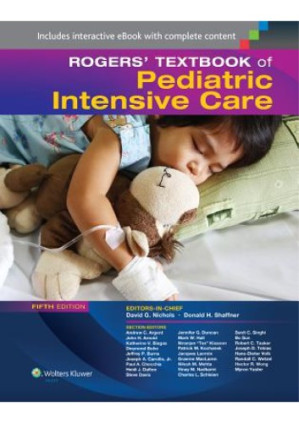
The Pinnacle of Critical Care: Rogers’ Textbook of Pediatric Intensive Care (5th Edition)
The Pediatric Intensive Care Unit (PICU) is the apex of medical complexity. When a child’s physiology collapses, survival depends entirely on the clinician’s ability to rapidly execute complex, invasive, and highly orchestrated interventions. Rogers’ Textbook of Pediatric Intensive Care (5th Edition) is the absolute, undisputed bible of the PICU. For pediatric intensivists, critical care fellows, and specialized PICU nurses, this massive, two-volume masterwork provides the uncompromising blueprints required to manage the most critically ill children in the hospital.
Mastering Pediatric Hemodynamic Monitoring and Shock Resuscitation
The core philosophy of this text is absolute physiological control. The authors aggressively deconstruct the hemodynamics of pediatric shock. They detail the exact, rigid algorithms for interpreting central venous oxygen saturation (ScvO2), arterial line waveforms, and utilizing bedside echocardiography to guide aggressive fluid resuscitation and precisely titrate complex vasoactive drips (epinephrine, milrinone, vasopressin) in warm vs. cold septic shock.
Advanced Respiratory Failure, ARDS, and ECMO Protocols
The book provides a masterclass in extreme cardiopulmonary support. It dictates the exact protocols for managing severe Pediatric Acute Respiratory Distress Syndrome (PARDS). It details precisely how to optimize high-frequency oscillatory ventilation (HFOV) and, when conventional ventilation fails, provides the definitive guidelines for initiating and managing Extracorporeal Membrane Oxygenation (ECMO) to physically bypass the damaged lungs.
Neurological Emergencies: Traumatic Brain Injury and Status Epilepticus
This is a fiercely practical guide to neurocritical care. The authors provide exhaustive details on preserving the injured brain. The text dictates the exact, rigid protocols for managing severe Traumatic Brain Injury (TBI), detailing how to utilize external ventricular drains (EVDs) to monitor intracranial pressure (ICP) and execute hyperosmolar therapy. It also provides the definitive algorithms for terminating refractory status epilepticus using continuous EEG monitoring.
Navigating Post-Operative Cardiac Care and Organ Transplantation
The final value of this reference is its absolute dominance in specialized post-operative care. The text provides the exact hemodynamic blueprints for managing neonates returning from complex open-heart surgeries (e.g., Norwood procedure). Furthermore, it dictates the intense immunosuppressive and physiological monitoring required following pediatric liver, heart, and kidney transplantation.
Frequently Asked Questions (FAQs)
Does this book cover the pharmacology of continuous infusions?
Yes, it features massive, critical sections detailing the exact pharmacokinetics, dosing algorithms, and toxicities of every sedative, paralytic, and inotrope utilized in the PICU setting.
Is ethics and palliative care addressed?
Absolutely. The text provides rigid frameworks for navigating end-of-life decisions, managing brain death protocols, and facilitating organ donation in the tragic event of irreversible pediatric mortality.
Who is the primary audience?
It is the absolute, undisputed, mandatory masterwork for Pediatric Intensivists, PICU Fellows, Anesthesiologists, and Advanced Practice PICU Nurses.
Conclusion
Rogers’ Textbook of Pediatric Intensive Care (5th Edition) proves that saving a critically ill child requires unparalleled physiological knowledge and the courage to execute massive interventions. It is the indispensable bedrock of global pediatric critical care. By mastering the shock algorithms, the ECMO protocols, and the neuroprotective strategies detailed in this monumental text, intensivists ensure they are providing the absolute highest echelon of life-saving medical care.