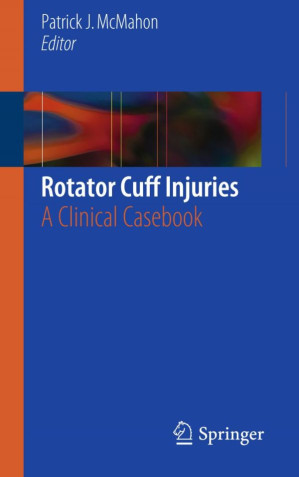

The Tendinous Failure: Rotator Cuff Injuries: A Clinical Casebook
The rotator cuff is a complex sleeve of four tendons (supraspinatus, infraspinatus, teres minor, subscapularis) that is mechanically squeezed between the humeral head and the acromion with every overhead movement. It is highly susceptible to degenerative tearing, leading to profound weakness and night pain. Rotator Cuff Injuries: A Clinical Casebook is a fiercely practical, highly focused manual designed to navigate the massive spectrum of cuff pathology. This volume provides the exact blueprints required to diagnose, repair, and rehabilitate the failing shoulder.
Mastering the Diagnostic Workup
The core philosophy of this text is tailored intervention. The authors aggressively detail the evaluation process using real-world clinical vignettes. It dictates exactly how to differentiate a painful, but functionally intact, tendinopathy requiring physical therapy from a massive, retracted tear requiring immediate arthroscopic repair, heavily emphasizing the interpretation of T2-weighted MRI to assess fatty infiltration of the muscle belly.
Navigating Surgical Controversies
The book provides a masterclass in arthroscopic decision-making. It dictates the exact clinical pathways for managing the “irreparable” cuff tear. It rigorously details the algorithms for deciding when a tear is too massive to fix, exploring salvage procedures like superior capsule reconstruction (SCR), tendon transfers (lower trapezius or latissimus dorsi), and the ultimate bailout: Reverse Total Shoulder Arthroplasty (RTSA).
Frequently Asked Questions (FAQs)
Does this book cover shoulder dislocations?
Only if the dislocation causes a concurrent rotator cuff tear (often seen in older patients). Its primary, obsessive focus is the rotator cuff tendons themselves.
Who is the primary audience?
It is the absolute, mandatory clinical atlas for Orthopedic Sports Medicine Surgeons, Shoulder Specialists, and advanced Physical Therapists.