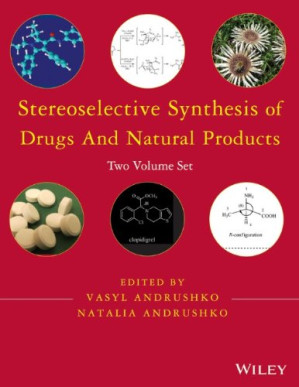


The Geometry of Healing: Stereoselective Synthesis of Drugs and Natural Products, Two Volume Set
In the intricate world of organic chemistry and pharmacology, the three-dimensional shape of a molecule is just as critical as its chemical composition. Stereoselective Synthesis of Drugs and Natural Products (Two Volume Set) is a monumental, exhaustive reference work dedicated to the art and science of building molecules with precise spatial arrangements. For synthetic organic chemists, medicinal chemists, and pharmaceutical researchers, this dual-volume masterpiece provides the theoretical foundations and practical methodologies required to synthesize the most complex and vital therapeutic agents on earth.
Why Stereochemistry Matters in Pharmacology
The human body is an intrinsically chiral environment. Our enzymes, receptors, and DNA are all asymmetrical, meaning they interact differently with molecules depending on their “handedness” (chirality). A drug molecule that is a “left-handed” enantiomer might be a life-saving cure, while its exact “right-handed” mirror image might be completely inactive, or worse, highly toxic. This textbook begins by underscoring the critical necessity of stereoselectivity—the ability to synthesize only the desired enantiomer—ensuring drug efficacy and eliminating adverse side effects caused by unwanted geometric isomers.
A Masterclass in Asymmetric Synthesis
The core of this two-volume set is its encyclopedic detailing of asymmetric synthesis techniques. It moves far beyond basic organic chemistry, diving deep into the sophisticated reactions used in modern pharmaceutical development. Readers will find incredibly detailed, step-by-step analyses of asymmetric hydrogenation, epoxidation, dihydroxylation, and organocatalysis. The authors meticulously explain the mechanism of action for various chiral auxiliaries, chiral catalysts, and chiral pool starting materials, allowing chemists to design synthesis routes with maximum yield and absolute enantiomeric excess (ee).
Unlocking the Secrets of Natural Products
Nature is the ultimate organic chemist, producing astonishingly complex, highly stereospecific molecules that form the basis for many modern drugs (such as the anti-cancer drug Taxol or the antimalarial Artemisinin). Volume Two is heavily dedicated to the total synthesis of these natural products. It deconstructs the brilliant, often Nobel-prize-winning synthetic routes developed by master chemists, illustrating how to build multiple stereocenters sequentially in highly constrained ring systems and complex macrocycles.
Catalysis: The Engine of Stereoselectivity
Modern stereoselective synthesis relies heavily on catalysis to drive reactions forward while simultaneously dictating the spatial arrangement of the product. The books provide a comprehensive review of transition metal-catalyzed asymmetric reactions, the revolutionary field of asymmetric organocatalysis (utilizing small organic molecules instead of heavy metals), and the increasingly vital role of biocatalysis (using engineered enzymes to achieve perfect stereoselectivity under mild, environmentally friendly conditions).
Industrial Applications and Scale-Up Challenges
A reaction that works flawlessly in a small test tube may fail catastrophically in a 10,000-liter industrial reactor. What sets this reference work apart is its dedication to the realities of pharmaceutical manufacturing. It addresses the immense challenges of scaling up stereoselective syntheses, discussing issues like catalyst recovery, solvent selection, thermodynamic stability, and the economic viability of utilizing chiral technologies on an industrial scale.
Frequently Asked Questions (FAQs)
Is this set appropriate for undergraduate chemistry students?
This two-volume set is highly advanced. While exceptional undergraduates may benefit from specific chapters, it is primarily targeted at graduate students, postdoctoral researchers, and professional synthetic chemists in the pharmaceutical industry.
Does the book provide specific experimental procedures?
While it is deeply mechanistic and theoretical, it frequently references benchmark experimental conditions and highlights specific, successfully executed syntheses from the primary literature.
Are computational methods for predicting stereoselectivity discussed?
Yes, modern synthetic planning often utilizes computational chemistry. The text includes sections on how Density Functional Theory (DFT) and molecular modeling are used to predict transition state energies and optimize stereoselective pathways.
Conclusion
Stereoselective Synthesis of Drugs and Natural Products is not merely a textbook; it is a vital laboratory companion. It captures the sheer elegance and staggering complexity of modern synthetic organic chemistry. By mastering the methodologies detailed within these two volumes, chemists gain the power to construct the precise molecular architectures necessary to develop the next generation of highly targeted, impeccably safe pharmaceutical drugs.