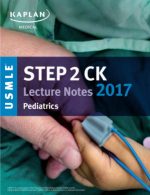

Board Exam Mastery: USMLE Step 2 CK Lecture Notes 2017: Pediatrics
The USMLE Step 2 Clinical Knowledge (CK) exam is a grueling, high-stakes test that determines a medical student’s future career options. The pediatrics section is notoriously challenging, requiring students to rapidly differentiate between congenital anomalies, infectious diseases, and developmental milestones based on subtle clues hidden within complex clinical vignettes. USMLE Step 2 CK Lecture Notes 2017: Pediatrics is the definitive, fiercely targeted study guide designed to dominate this exam. This volume provides the exact, high-yield information and test-taking strategies required to achieve a top-tier score.
Mastering High-Yield Pediatric Syndromes and Diseases
The core philosophy of this text is absolute efficiency. The authors aggressively eliminate extraneous details, focusing exclusively on the “testable” facts. They dictate the exact presentations, diagnostic criteria, and pathognomonic findings for high-yield conditions, ranging from cyanotic congenital heart defects (e.g., Tetralogy of Fallot) to classic pediatric infections (e.g., Kawasaki disease, pertussis) and genetic syndromes (e.g., fragile X, Marfan syndrome).
Navigating Complex Vignettes and Diagnostic Dilemmas
The book provides a masterclass in dissecting board-style questions. It dictates exactly how to identify the “buzzwords” and key clinical findings (like a “machine-like murmur” or a “strawberry tongue”) that point unequivocally to the correct diagnosis. It provides exhaustive differential diagnosis tables, ensuring the student can quickly eliminate incorrect options that share overlapping symptoms with the actual disease.
Managing the “Next Best Step” in Management
This is a fiercely practical guide to clinical decision-making. The USMLE Step 2 CK frequently tests not just the diagnosis, but the immediate management. The text dictates the rigid, algorithmic protocols for the “next best step”—whether it is ordering a specific confirmatory lab test, initiating empiric antibiotics, or requesting a surgical consult—ensuring the student thinks like an experienced clinician.
Integrating Pathophysiology with Clinical Presentation
The final value of this reference is its cohesive approach to medical science. The text does not simply list facts to memorize; it dictates the underlying pathophysiology of pediatric diseases. It ensures that students understand *why* a child with cystic fibrosis develops meconium ileus, or *why* a patient with sickle cell anemia is susceptible to encapsulated organisms, cementing the knowledge for the exam and for future clinical practice.
Frequently Asked Questions (FAQs)
Does this book cover pediatric immunizations?
Yes, it features critical, highly tested sections on the standard immunization schedule, dictating the specific contraindications for live vaccines (e.g., MMR, Varicella) in immunocompromised pediatric patients.
Are there specific guidelines for recognizing child abuse on the exam?
Absolutely. It provides explicit protocols for identifying the classic red flags of non-accidental trauma, such as retinal hemorrhages or metaphyseal corner fractures, and dictates the legal obligation to report.
Who is the primary audience?
It is the absolute, mandatory study companion for Medical Students preparing for the USMLE Step 2 CK or their pediatric clerkship shelf exam.
Conclusion
USMLE Step 2 CK Lecture Notes 2017: Pediatrics proves that acing the boards is not about knowing everything; it is about knowing exactly what matters. It is the indispensable bedrock of exam preparation. By mastering the high-yield syndromes, the diagnostic algorithms, and the “next best step” protocols detailed in this vital volume, students can guarantee a superior performance on test day.