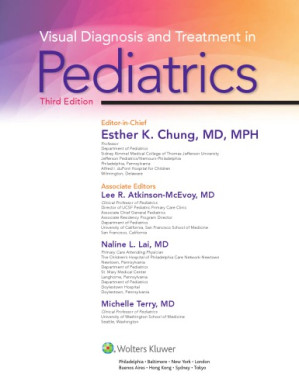


Seeing the Pathology: Visual Diagnosis and Treatment in Pediatrics – 3rd Edition
In the chaotic reality of a busy pediatric practice or emergency room, a clinician often has only seconds to formulate an initial differential diagnosis. A child’s physical appearance—their posture, their breathing pattern, the exact morphology of a rash—often screams the diagnosis long before the first lab result returns. Visual Diagnosis and Treatment in Pediatrics – 3rd Edition (2014 Release) is the definitive, fiercely concentrated diagnostic manual dedicated entirely to pattern recognition. For pediatricians, emergency physicians, and family practitioners, this massive volume provides the uncompromising blueprints required to instantly identify hundreds of pediatric pathologies through visual cues alone.
Rapid Visual Recognition of Acute Pediatric Exanthems and Rashes
The core philosophy of this text is that seeing the lesion is the fastest path to the cure. The authors aggressively deconstruct the pediatric dermatological exam. They provide thousands of high-definition images, dictating exactly how to differentiate the benign, targetoid lesions of erythema multiforme from the terrifying, sloughing necrosis of Stevens-Johnson Syndrome or the petechial rash of meningococcal sepsis.
Identifying Dysmorphic Features and Genetic Syndromes
The book provides a masterclass in clinical dysmorphology. It dictates the exact facial and structural markers required to instantly suspect a complex genetic syndrome. It details precisely how to recognize the upslanting palpebral fissures of Trisomy 21, the webbed neck of Turner Syndrome, or the elfin facies of Williams Syndrome, immediately guiding the clinician toward the necessary genetic testing and echocardiograms.
Visual Cues for Complex Systemic Disease and Child Abuse (NAI)
This is a fiercely practical guide to recognizing hidden systemic catastrophes. The authors provide exhaustive details on the visual manifestations of internal disease. The text dictates the exact ocular findings associated with systemic juvenile idiopathic arthritis (JIA). Crucially, it provides massive, unflinching chapters on the visual recognition of Non-Accidental Injury (NAI), dictating exactly how to differentiate typical toddler bruises from the catastrophic, patterned injuries characteristic of severe child abuse.
Linking Visual Findings to Evidence-Based Treatment Algorithms
The final value of this reference is its absolute integration of diagnosis and action. A photograph is useless without a plan. The text dictates the exact, evidence-based treatment algorithms that must immediately follow the visual diagnosis. It outlines precisely which antibiotics to prescribe for a recognized impetigo infection, or the urgent surgical referral required for a visually diagnosed incarcerated inguinal hernia.
Frequently Asked Questions (FAQs)
Does this book cover visual diagnosis of pediatric infectious diseases?
Yes, it features critical sections on recognizing the classic presentations of Lyme disease (erythema migrans), Kawasaki disease (strawberry tongue, desquamation), and severe orbital cellulitis.
Is this useful for preparing for pediatric board exams?
Absolutely. It is universally considered a mandatory review tool for the “picture questions” on the pediatric boards, rapidly building the clinician’s visual memory bank.
Who is the primary audience?
It is the absolute, undisputed, mandatory diagnostic weapon for Pediatricians, Emergency Medicine Physicians, Family Practitioners, and Pediatric Nurse Practitioners.
Conclusion
Visual Diagnosis and Treatment in Pediatrics proves that exceptional pediatric care requires a highly trained, perceptive eye. It is the indispensable bedrock of rapid clinical assessment. By memorizing the massive library of visual presentations, dysmorphic features, and associated treatment algorithms detailed in this volume, clinicians ensure they can rapidly and accurately diagnose a child the moment they walk into the room.