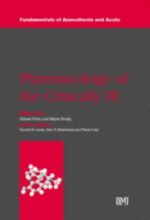
Surviving the ICU: Pharmacology of the Critically Ill
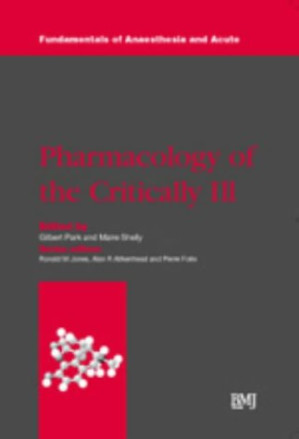
When a patient is admitted to the Intensive Care Unit (ICU) with massive trauma or overwhelming sepsis, their body essentially begins to destroy itself. Their kidneys fail, their liver shuts down, and their blood vessels collapse. In this chaotic, hyper-dynamic environment, standard drug dosing rules become completely useless—and often lethal. Pharmacology of the Critically Ill is the definitive, uncompromising manual for navigating this pharmacological nightmare. For intensivists, critical care pharmacists, and ICU nurses, this volume provides the absolute, life-saving blueprints required to dose highly toxic drugs in a body that is actively shutting down.
The Extreme Pharmacokinetics of Organ Failure
The opening chapters of this book destroy the illusion of steady-state pharmacology. The authors establish that a critically ill patient is a moving target. They rigorously explain how the massive systemic inflammation of shock completely alters how a drug is absorbed, distributed, and destroyed. The text details the terrifying reality of acute kidney injury (AKI) and acute liver failure, demanding that the clinician calculate entirely new, mathematically intense dosing regimens on the fly to prevent massive drug accumulation and death.
Managing Sepsis and Massive Vasopressor Requirements
The core of the textbook provides a masterclass in hemodynamic resuscitation. The authors exhaustively detail the pharmacology of Septic Shock. Readers will learn the exact, minute-by-minute titration protocols for high-dose vasopressors (Norepinephrine, Vasopressin, Epinephrine). The text explains exactly how to chemically force the collapsed blood vessels to constrict, mechanically driving blood back into the failing brain and heart before the patient suffers irreversible anoxic damage.
Continuous Renal Replacement Therapy (CRRT) and Drug Clearance
This is a fiercely technical guide to artificial organs. When a patient’s kidneys die, the ICU utilizes Continuous Renal Replacement Therapy (CRRT)—a massive machine that artificially filters the blood 24 hours a day. The authors detail the mathematical nightmare this creates: the machine does not just remove waste; it aggressively rips life-saving antibiotics directly out of the patient’s blood. The book provides the exact equations required to calculate how much antibiotic the machine is stealing, allowing the pharmacist to massively increase the dose and save the patient from the infection.
The Chaos of Volume of Distribution (Vd) in Edema
The book tackles the massive physical changes of critical illness. During severe shock, the patient’s blood vessels leak, and they often swell with 30 pounds of third-spaced fluid (massive edema). The authors explain how this massive increase in water weight drastically alters the “Volume of Distribution” for hydrophilic (water-loving) drugs. If the clinician does not mathematically account for this extra water, the antibiotic will be diluted to useless levels, and the patient will die of the infection.
Navigating Sedation, Analgesia, and Delirium
The final chapters address the psychological terror of the ICU. The authors provide rigorous, highly controlled protocols for managing the patient’s brain. They detail the exact pharmacology of deep sedation (Propofol, Dexmedetomidine) and massive analgesia (Fentanyl infusions) required to tolerate a mechanical ventilator. Crucially, they explore the devastating consequences of ICU Delirium, providing the precise pharmacological interventions required to pull the patient’s mind back to reality.
Frequently Asked Questions (FAQs)
Does this book cover ECMO (Extracorporeal Membrane Oxygenation)?
Yes, it features critical sections on how hooking a patient up to a massive artificial heart-lung machine completely alters the pharmacokinetics of almost every drug in the hospital.
Is a background in critical care required?
Absolutely. This is a highly advanced professional manual requiring a profound understanding of hemodynamics, advanced life support (ACLS), and complex pharmacokinetics.
Who is the primary audience?
It is the absolute gold-standard reference for Board-Certified Critical Care Pharmacists (BCCCP), ICU attending physicians (Intensivists), and advanced practice ICU nurses.
Conclusion
Pharmacology of the Critically Ill is the ultimate weapon against systemic collapse. It proves that in the ICU, standard pharmacology is dead. By mastering the extreme kinetics, the complex CRRT dosing equations, and the aggressive vasopressor protocols detailed in this volume, critical care professionals can mathematically outmaneuver the chaos of organ failure, dragging their patients back from the absolute edge of death.