The Architect’s Guide to Medicine: Synthesis of Essential Drugs
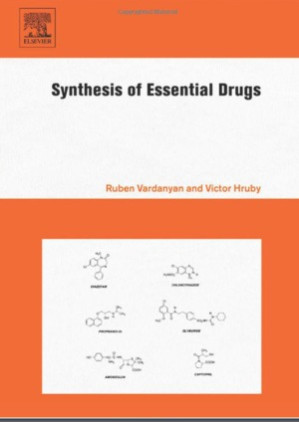
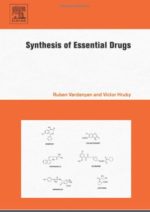
Every single pill in a pharmacy is a masterpiece of molecular architecture. Before a drug can save a life, an organic chemist must mathematically design its structure and physically build it from scratch, linking carbon, nitrogen, and oxygen atoms together in a highly specific, three-dimensional arrangement. Synthesis of Essential Drugs by Ruben Vardanyan and Victor Hruby is the definitive, fiercely technical blueprint for this process. For medicinal chemists, industrial process engineers, and advanced pharmacology researchers, this massive volume provides the exact chemical equations required to manufacture the most critical pharmaceutical compounds on Earth.
The Masterclass of Medicinal Chemistry
The opening chapters of this book establish a rigorous foundation in advanced organic synthesis. The authors do not waste time on basic chemistry; they dive straight into complex reaction mechanisms, stereochemistry, and catalytic hydrogenation. They explain that a drug is only effective if its 3D shape is flawless. If a chemist accidentally synthesizes the “left-handed” (levo) version of a molecule instead of the “right-handed” (dextro) version, the resulting drug might be completely useless, or worse, fatally toxic.
Deconstructing the World’s Most Critical Pharmaceuticals
The core of the textbook provides an exhaustive, drug-by-drug breakdown of the World Health Organization’s “Essential Medicines” list. For each major drug—whether it is a complex antibiotic like Amoxicillin, a heavy-hitting cardiac drug like Amiodarone, or a life-saving oncology agent—the authors provide the complete, step-by-step synthetic pathway. Readers will follow the exact sequence of chemical reactions required to transform raw, basic chemical precursors into a highly purified, biologically active pharmaceutical ingredient (API).
Advanced Organic Synthesis and Retrosynthetic Analysis
This is a book for builders. It heavily utilizes Retrosynthetic Analysis—the brilliant strategy of looking at the complex final drug molecule and mentally breaking it apart, step-by-step, until you arrive at the cheap, commercially available starting chemicals. The text provides the advanced logic required to design a synthetic route that uses the fewest steps, the safest reagents, and produces the highest possible yield.
Overcoming Industrial Scale-Up Challenges
Making a single gram of a drug in a pristine laboratory beaker is a massive scientific achievement. However, making ten tons of that exact same drug in a massive, boiling industrial reactor is an engineering nightmare. The authors provide crucial insights into the harsh reality of industrial scale-up, detailing how synthetic routes must be drastically altered to avoid using highly explosive solvents or insanely expensive rare-earth catalysts when manufacturing at a global scale.
The Evolution of Synthetic Pathways
The final chapters explore the history of chemical ingenuity. The authors detail how the synthesis of classic drugs has evolved over decades, showcasing how modern chemists have invented new, highly efficient, “greener” chemical reactions to replace the dangerous and highly toxic manufacturing processes of the past.
Frequently Asked Questions (FAQs)
Does this book cover the synthesis of biologic drugs (like monoclonal antibodies)?
No. This book is strictly focused on “small molecule” organic chemistry. Biologics are massive proteins grown inside living cells (CHO cells), not synthesized in a traditional chemistry lab.
Is a background in organic chemistry required?
Absolutely. This is a graduate-level text requiring a profound understanding of organic reaction mechanisms, electron pushing, and complex molecular nomenclature.
Who is the primary audience?
It is the ultimate desk reference for Ph.D. medicinal chemists in the pharmaceutical industry, and an indispensable textbook for graduate students in advanced organic synthesis programs.
Conclusion
Synthesis of Essential Drugs is a brilliant homage to the power of human engineering. It proves that the cures for human disease are not magic; they are the result of flawless, rigorously designed chemical architecture. By mastering the advanced synthetic pathways and complex organic mechanisms detailed in this massive volume, chemists can confidently build the molecular weapons required to fight disease, ensuring a stable, high-quality supply of the world’s most vital medications.