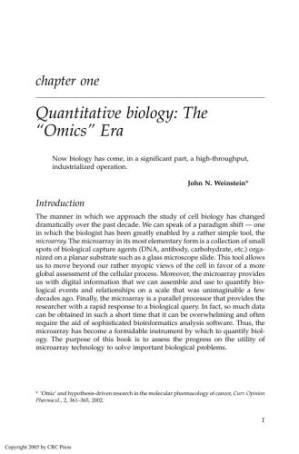


The High-Throughput Revolution: Applying Genomic and Proteomic Microarray Technology
For the entire 20th century, biological research was an agonizingly slow, linear process. A scientist would hypothesize that a single gene caused a disease, run a complex experiment to test that one gene, and wait days for the result. The invention of the Microarray completely shattered that paradigm, allowing scientists to test ten thousand genes simultaneously in a matter of hours. Applying Genomic and Proteomic Microarray Technology in Drug Discovery is the definitive, highly advanced technical manual exploring the explosive power of high-throughput biology. For molecular biologists, industrial bioengineers, and pharmaceutical researchers, this volume provides the critical blueprints required to discover the next blockbuster drug at unprecedented speed.
The Microarray Concept: Thousands of Experiments on a Single Chip
The opening chapters of this book deconstruct the brilliant engineering of the microarray chip. The authors explain how robotic arms spot thousands of microscopic dots of DNA (or protein) onto a tiny glass slide. Readers will understand the fundamental physics of fluorescence-based detection, learning how a laser scanner reads the slide, translating millions of microscopic chemical reactions into a massive, highly complex digital dataset that reveals the exact internal state of the cell.
DNA Microarrays: Mapping Gene Expression
The core of the textbook provides a masterclass in Transcriptomics. It rigorously details how researchers use DNA microarrays to compare a healthy cell against a cancer cell. The text explains the complex process of extracting mRNA, labeling it with glowing dyes, and washing it over the chip. The resulting colors immediately tell the scientist exactly which hundreds of genes the cancer has aggressively turned “on” and which tumor-suppressor genes it has dangerously turned “off.”
Protein Microarrays: Decoding Cellular Networks
Genes are only the blueprints; proteins do the actual work. The book pushes past DNA and explores the massive complexity of Proteomic Microarrays. The authors detail the immense engineering challenges required to stick fragile, complex 3D proteins onto a glass slide without destroying their shape. Readers will explore how these chips are used to map complex protein-protein interactions, discovering exactly how a virus binds to a human cell, or how a new drug physically locks onto its target receptor.
Target Identification and Biomarker Discovery
This is a fiercely practical guide to industrial drug discovery. The text explains how pharmaceutical companies utilize microarrays to identify new “Drug Targets.” If a microarray proves that a specific enzyme is massive overproduced in every patient with Rheumatoid Arthritis, that enzyme instantly becomes a multi-billion dollar target for a new drug. Furthermore, it details how chips are used to discover “Biomarkers”—simple blood tests that can diagnose a disease years before symptoms appear.
Accelerating the Preclinical Pipeline and Toxicology
The final chapters explore how microarrays are used to prevent catastrophic drug failures. The authors detail the field of “Toxicogenomics.” Before a new drug is ever given to a human, it is tested on liver cells in a lab. A microarray instantly reads the liver cells’ genetic response. If the chip shows that the drug has triggered the “apoptosis” (cell death) genes, the pharmaceutical company knows the drug is fatally toxic and immediately stops development, saving billions of dollars.
Frequently Asked Questions (FAQs)
Does this book cover next-generation sequencing (NGS)?
While focused on microarrays, it provides critical comparative analysis, explaining when a cheap, highly focused microarray is actually vastly superior to expensive, massive whole-genome sequencing.
Is a strong background in data science required?
Yes. A microarray experiment generates massive amounts of digital noise. The book requires an understanding of basic bioinformatics and statistical clustering algorithms to actually interpret the data.
Who is the primary audience?
It is the absolute gold-standard manual for Ph.D. geneticists, academic research lab directors, and principal investigators in the pharmaceutical industry.
Conclusion
Applying Genomic and Proteomic Microarray Technology is the ultimate guide to biological big data. It proves that the future of medicine belongs to those who can process the most information the fastest. By mastering the complex engineering, rigorous laboratory protocols, and advanced bioinformatics detailed in this volume, scientists can leverage the massive power of high-throughput technology, radically accelerating the discovery of targeted, highly effective cures for human disease.