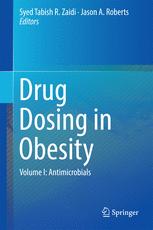
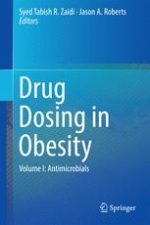
Precision Prescribing: Drug Dosing in Obesity: Volume I: Antimicrobials
The global obesity epidemic has fundamentally altered the physical landscape of patient care. Yet, shockingly, the vast majority of pharmaceutical drugs on the market today were approved based on clinical trials conducted almost exclusively on healthy individuals of normal body weight. When treating severe infections in obese patients, utilizing standard dosing guidelines is not just ineffective—it is frequently dangerous. Drug Dosing in Obesity: Volume I: Antimicrobials is a critical, desperately needed clinical manual that bridges this dangerous knowledge gap. For infectious disease physicians, clinical pharmacists, and intensive care specialists, this book provides the rigorous pharmacokinetic data required to dose life-saving antibiotics accurately in the obese population.
The Pharmacokinetic Challenges of Obesity
Obesity does not simply mean a patient weighs more; it fundamentally alters their entire physiological makeup. The opening chapters of this text provide a masterclass in altered pharmacokinetics. The authors rigorously explain how increased adipose tissue drastically alters the Volume of Distribution (Vd) for lipophilic drugs. Furthermore, they explore the complex changes in hepatic metabolism and the frequently hyperdynamic renal clearance (glomerular filtration rate) seen in obese patients, which can cause them to clear certain drugs from their system much faster than a normal-weight patient.
Standardizing Dosing Metrics (IBW vs. TBW vs. ABW)
The most confusing aspect of dosing in obesity is deciding which “weight” to use in the mathematical calculation. This book brings absolute clarity to this mathematical chaos. It provides clear, evidence-based guidelines on exactly when a clinician should utilize Ideal Body Weight (IBW), Total Body Weight (TBW), or a calculated Adjusted Body Weight (ABW). Using the wrong metric can result in a massive, potentially lethal overdose, or a sub-therapeutic underdose that guarantees treatment failure.
Class-Specific Antimicrobial Guidelines
The core of this invaluable reference guide is its exhaustive, drug-by-drug breakdown of antimicrobial classes. It does not offer vague generalizations; it provides specific, mathematically sound dosing protocols based on the latest primary literature. Clinicians will find highly detailed guidance for:
- Hydrophilic Antibiotics (e.g., Beta-lactams, Aminoglycosides): Exploring why these drugs often require altered dosing intervals or extended infusions in obese patients due to altered renal clearance and larger central compartments.
- Lipophilic Antibiotics (e.g., Fluoroquinolones, Macrolides): Detailing how these drugs extensively distribute into deep adipose tissue, drastically altering their half-life and requiring complex loading doses to achieve therapeutic blood levels rapidly.
- Antifungals and Antivirals: Providing critical updates on complex, highly toxic agents like Amphotericin B and Acyclovir, where precise weight-based dosing is necessary to prevent severe nephrotoxicity.
Preventing Underdosing and Antimicrobial Resistance
In the ICU setting, the greatest risk to an obese patient with sepsis is not an overdose; it is a massive underdose. The textbook heavily emphasizes the clinical danger of utilizing standard, fixed-dose antibiotic regimens (like a standard 1g dose of Vancomycin) in a 150kg patient. The text explains how this underdosing leads to sub-therapeutic tissue concentrations, guaranteeing that the infection will spread while simultaneously fueling the creation of multidrug-resistant “superbugs.”
Indispensable for Clinical Pharmacists and Intensivists
This book is designed for the front lines of critical care. It synthesizes hundreds of fragmented clinical trials and pharmacokinetic case studies into a single, highly organized, rapid-reference tool. It empowers clinicians to confidently order aggressive, non-standard antimicrobial doses, knowing their decisions are backed by the highest levels of pharmacokinetic evidence.
Frequently Asked Questions (FAQs)
Does this book cover dosing in bariatric surgery patients?
While primarily focused on the pharmacokinetic changes of active obesity, the principles discussed provide the foundational knowledge required to understand how massive weight loss and altered GI anatomy impact drug absorption.
Is Therapeutic Drug Monitoring (TDM) discussed?
Yes, the book heavily emphasizes that for highly toxic drugs (like Vancomycin or Aminoglycosides), altered weight-based dosing must always be paired with rigorous blood level monitoring to ensure safety and efficacy.
Is this relevant for pediatric patients?
This specific volume focuses primarily on adult obesity. The pharmacokinetics of childhood obesity represent a distinct, highly complex sub-specialty.
Conclusion
Drug Dosing in Obesity: Volume I: Antimicrobials is a life-saving reference text. It demands that the medical community abandon the dangerous “one size fits all” approach to prescribing. By mastering the complex pharmacokinetic principles detailed in this book, healthcare professionals can ensure that their most vulnerable, critically ill obese patients receive the exact, aggressive antimicrobial therapy required to cure their infections and save their lives.