Ensuring Human Safety: Nonclinical Safety Assessment
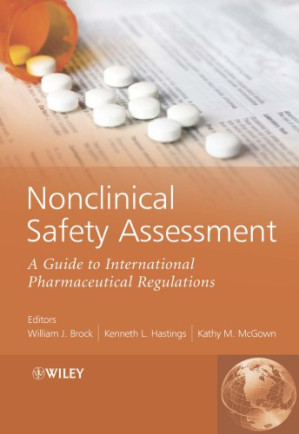
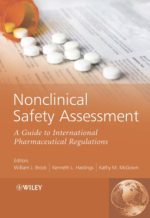
Before a revolutionary new drug can ever be tested in a human being, it must undergo a grueling gauntlet of laboratory tests to prove it will not cause catastrophic harm. This highly regulated pre-human testing phase is known as nonclinical safety assessment. Nonclinical Safety Assessment: A Guide to International Pharmaceutical Regulations is the definitive textbook that maps this complex regulatory landscape. For toxicologists, pharmacologists, and regulatory affairs professionals, this comprehensive volume provides the exact protocols required to legally and ethically transition a molecule from the laboratory bench to Phase I human clinical trials.
The Crucial Bridge Between the Lab and the Clinic
The history of pharmacology is unfortunately scarred by tragedies—such as the thalidomide disaster—where inadequate nonclinical testing resulted in devastating human suffering. The opening chapters of this book explore the ethical and legal foundations of safety pharmacology. It explains that the primary goal of nonclinical testing is not to prove a drug works (efficacy), but to rigorously identify its toxic liabilities, determine a safe starting dose for human trials, and identify which specific human organs must be most closely monitored during those trials.
Navigating International ICH Guidelines
The pharmaceutical industry is global, and navigating the conflicting regulations of different countries can be a logistical nightmare. This book provides a masterclass in the International Council for Harmonisation (ICH) guidelines—the globally recognized standards that harmonize the regulatory expectations of the FDA (US), EMA (Europe), and PMDA (Japan). Readers will learn exactly which specific animal and in vitro studies must be completed (and precisely how they must be documented) to submit a successful Investigational New Drug (IND) application anywhere in the world.
Toxicology, Carcinogenicity, and Teratogenicity
The core of the textbook provides deep, methodological dives into the specific disciplines of toxicological testing. It outlines the protocols for:
- Acute and Repeated-Dose Toxicity: Determining the Maximum Tolerated Dose (MTD) and the No Observed Adverse Effect Level (NOAEL) over short and long-term exposures.
- Genotoxicity and Carcinogenicity: Utilizing the Ames test and long-term rodent bioassays to ensure the drug does not mutate DNA or cause cancer.
- Reproductive Toxicology (Teratogenicity): Rigorous testing to ensure the compound does not cause infertility or catastrophic birth defects in a developing fetus.
Designing Valid Animal Models
While the goal is to reduce animal testing, the use of mammalian models remains a regulatory requirement for IND approval. The book provides essential guidance on the ethical selection of animal models, explaining why a rat might be an appropriate model for one drug’s metabolism, while a non-human primate is absolutely required for a complex biological drug (like a monoclonal antibody) to ensure relevant immunological cross-reactivity.
The Shift Toward In Vitro and In Silico Testing
The text is fiercely forward-looking, addressing the modern scientific and ethical push to minimize animal testing. It explores the regulatory acceptance of cutting-edge alternatives, including advanced in vitro human cell cultures, “organ-on-a-chip” microfluidic technologies, and highly sophisticated in silico computer modeling capable of predicting a molecule’s toxicological profile based purely on its chemical structure.
Frequently Asked Questions (FAQs)
Is this book only for those working in the pharmaceutical industry?
While essential for pharma professionals, it is also highly valuable for academic researchers who have discovered a promising molecule and need to understand the regulatory hurdles required to commercialize it.
Does it cover the safety assessment of biologics and vaccines?
Yes, it features dedicated chapters addressing the unique safety assessment challenges posed by large biological molecules, which often behave very differently than traditional small-molecule chemicals.
Is Good Laboratory Practice (GLP) discussed?
Absolutely. The book heavily emphasizes GLP—the strict quality system concerned with the organizational process and the conditions under which non-clinical health and environmental safety studies are planned, performed, monitored, and reported.
Conclusion
Nonclinical Safety Assessment is a vital regulatory roadmap. It proves that the path to a new medical cure must be paved with rigorous, uncompromising safety data. By mastering the international regulations and toxicological protocols detailed in this book, scientists and regulatory professionals can confidently bring innovative new therapies to the clinic, guaranteeing the highest possible level of safety for the brave patients who volunteer for clinical trials.