The Essential Prescriber’s Manual: A Practical Guide to the Safe Use of Common Drugs
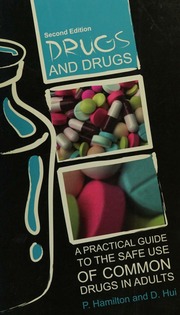
When a junior doctor or nurse prescriber is faced with a patient suffering from three different acute diseases, they do not need an exhaustive history of pharmacology; they need to know exactly what drug to write on the chart right now, and exactly what that drug might do to kill the patient. Drugs and Drugs: A Practical Guide to the Safe Use of Common Drugs in Adults is the definitive, fiercely optimized survival manual for the clinical ward. It strips away the deep academic theory and provides the absolute, uncompromising, high-yield blueprints required to prescribe the most common medications with flawless safety.
Stripping Away the Theory for Immediate Clinical Action
The core philosophy of this guide is radical data compression. The authors understand that the transition from a classroom to a hospital ward is terrifying. This book acts as a curated “greatest hits” of pharmacology. It completely bypasses rare, specialized medications and focuses intensely on the drugs a clinician will actually use every single day—the antibiotics, the painkillers, the blood pressure pills, and the diabetic agents.
Mastering the Top 100 Most Prescribed Medications
This is a fiercely practical instruction manual. It does not just list the drug; it teaches the clinician how to use it safely. The text provides highly structured, rapidly readable monographs for the core formulary. It details the exact starting dose, the specific route of administration, and the mandatory monitoring required to ensure the drug is actually working without causing harm.
Ruthless Focus on Contraindications and Lethal Interactions
The book pushes past basic prescribing and enters the realm of risk management. The authors provide highly visible, bulleted lists of absolute contraindications. It provides the prescriber with the instantaneous knowledge required to recognize that giving a common NSAID (like ibuprofen) to an elderly patient with heart failure and failing kidneys is a catastrophic, potentially fatal error.
Practical Adjustments for Liver and Kidney Failure
The book tackles the most dangerous variable in prescribing: organ failure. If a patient’s kidneys are dying, standard drug doses become toxic overdoses. The authors provide the exact, rapid-reference algorithms required to adjust drug doses based on a patient’s estimated Glomerular Filtration Rate (eGFR), ensuring the clinician can safely treat a sick patient without destroying their remaining kidney function.
Rapid Triage for Common Adverse Drug Reactions (ADRs)
The final value of this formulary is its focus on fixing mistakes. The authors provide highly condensed guidance on recognizing and managing the most common Adverse Drug Reactions (ADRs). It teaches the clinician how to differentiate a mild, acceptable side effect from a severe, life-threatening allergic reaction, providing the exact protocols required to intervene immediately.
Frequently Asked Questions (FAQs)
Should I use this instead of my official hospital formulary (like the BNF or Epocrates)?
No. This is an educational survival guide designed to teach you how to prescribe safely. When writing the actual legal order, you must always double-check the exact dose in your hospital’s live, official electronic formulary.
Is this book useful for medical students?
Yes, it is highly beneficial for clinical medical students (M3/M4) who are just learning the practical realities of ward prescribing and need to bridge the gap between their massive textbooks and real patients.
Who is the primary audience?
It is the absolute, mandatory pocket companion for newly qualified junior doctors (Interns/FY1s), nurse prescribers, and physician assistants (PAs).
Conclusion
Drugs and Drugs: A Practical Guide proves that safe prescribing is about mastering the fundamentals, not memorizing obscurities. It is an indispensable shield against clinical disaster. By utilizing the clear dosing guidelines, the rigid contraindication warnings, and the critical organ-failure adjustments provided in this volume, junior clinicians can confidently step onto the ward, ready to write safe, effective prescriptions for their patients.