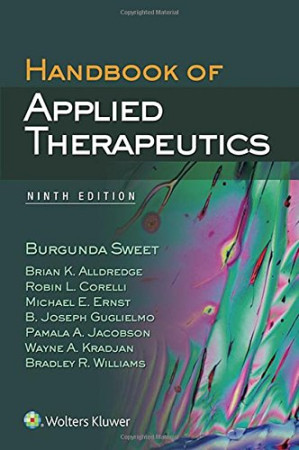
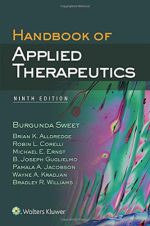
The Pocket-Sized Clinical Masterclass: Handbook of Applied Therapeutics (9th Edition)
Clinical pharmacists are the ultimate guardians of patient safety, but they cannot carry a massive, ten-pound therapeutics encyclopedia with them on morning rounds. Handbook of Applied Therapeutics (9th Edition) is the definitive, fiercely optimized tactical translation of the massive Applied Therapeutics: The Clinical Use of Drugs textbook. For clinical pharmacists, PharmD students, and medical residents, this pocket-sized volume aggressively condenses thousands of pages of theory into the absolute, uncompromising blueprints required for rapid disease-state management on the hospital floor.
Distilling Massive Therapeutics into Actionable Data
The core philosophy of this handbook is ruthless efficiency. The authors understand that in a clinical setting, time is a matter of life and death. The text completely bypasses the deep pathophysiological theory and historical context. It focuses entirely on what the clinician actually needs to know right now: the exact clinical presentation of the disease, the immediate pharmacological treatment, and the specific monitoring parameters.
Disease-State Management Algorithms
This is a fiercely clinical guide. The book is organized purely by disease state (e.g., Asthma, Sepsis, Epilepsy), not by drug class. If a patient is admitted in a severe asthma exacerbation, the pharmacist can instantly flip to the respiratory section and view the exact, step-by-step treatment algorithm mandated by national guidelines, ensuring the patient receives the perfect sequence of steroids and bronchodilators.
Evidence-Based Treatment Guidelines
The core of the handbook provides a masterclass in clinical intervention. The authors do not just list drugs; they provide the exact blueprints for writing a complete Patient Care Plan. They detail exactly how to initiate therapy, how to titrate (adjust) the dose based on daily lab results, and exactly when to abandon a failing therapy and switch to a second-line agent.
Monitoring and Modifying Therapy
This is a highly practical guide to patient safety. The book heavily utilizes rapid-reference tables for Therapeutic Drug Monitoring (TDM). The clinician can instantly cross-reference a specific toxic drug (like Vancomycin) against a patient’s kidney function, locating the exact renal dosage adjustment required to prevent a massive, fatal drug accumulation in the patient’s blood.
Patient-Centered Care and Polypharmacy
The final value of this reference is its focus on complex polypharmacy. The authors provide highly accessible guidance on dosing in the extremes of age and managing patients with multiple interacting diseases, ensuring the pharmacist can safely untangle a horrifying, 15-drug medication list upon hospital admission.
Frequently Asked Questions (FAQs)
Can I use this handbook instead of the main textbook for my classes?
No. The handbook tells you what to do. The main textbook tells you why you are doing it. You must understand the underlying pathophysiology from the main text to pass your board exams.
Is the 9th Edition (2015) still clinically accurate?
The fundamental disease-state algorithms and classic drug dosing remain highly relevant. However, clinical pharmacists must always cross-reference treatment plans against the absolute newest, live FDA/guideline updates for novel biologic therapies.
Who is the primary audience?
It is the absolute, mandatory coat-pocket companion for P3 and P4 PharmD students on clinical rotations, clinical hospital pharmacists, and Medical Residents.
Conclusion
Handbook of Applied Therapeutics proves that brilliant clinical practice requires rapid access to flawless data. It is an indispensable tool for the chaotic hospital ward. By utilizing the rapid-reference tables, the disease-state algorithms, and the rigorous care plan templates provided in this volume, clinicians can make rapid, life-saving interventions, ensuring absolute safety for every patient.