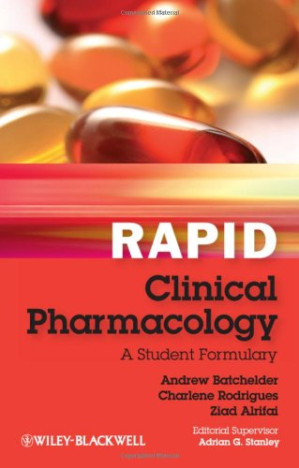
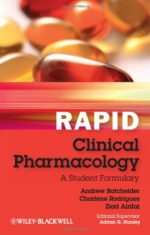
The Medical Student’s Pocket Dictionary: Rapid Clinical Pharmacology: A Student Formulary
As a medical student transitions from the safety of the lecture hall to the terrifying reality of the hospital ward, their needs change completely. They no longer need a 1,000-page book explaining how a drug was discovered; they need a pocket-sized guide telling them exactly how much of that drug to give a crashing patient. Rapid Clinical Pharmacology: A Student Formulary is the definitive, fiercely optimized survival tool for clinical rotations. It bridges the massive gap between theoretical science and practical prescribing, delivering high-yield, life-saving data directly into the pockets of junior doctors.
A Condensed, High-Yield Student Formulary
The core philosophy of this guide is radical data compression. The authors have systematically stripped away the dense academic prose found in primary textbooks. This book acts as a curated “mini-dictionary,” specifically selecting only the most common, high-yield medications that a junior doctor will actually encounter and be expected to prescribe during their foundational years on the ward.
Perfecting the Art of Ward Prescribing
This is a fiercely practical instruction manual. It does not just list the drug; it teaches the student exactly how to legally and safely order it. The text provides rigorous guidelines on writing prescriptions, detailing the specific route (oral, IV, IM), the required frequency, and the exact adult dosages, warning students of the classic “rookie mistakes” that lead to fatal ten-fold dosing errors.
Critical Dosing and Administration Routes
The book pushes past basic prescribing and enters the realm of clinical safety. The authors provide crucial information on IV administration. They detail exactly how fast a drug can be pushed into a vein and which fluids (saline vs. dextrose) are required to dilute it, ensuring the student does not accidentally cause a fatal cardiac arrhythmia or destroy the patient’s blood vessels.
Navigating Contraindications and Side Effects
The final value of this formulary is its focus on rapid triage. The authors provide highly condensed, bulleted lists of absolute contraindications and the most dangerous adverse effects. It provides the junior doctor with the instantaneous knowledge required to recognize that giving a specific painkiller to a patient with a bleeding stomach ulcer is a lethal clinical error.
Bridging the Gap Between Textbooks and Real Patients
Unlike massive national formularies (like the BNF), which can be overwhelming to a novice, this “Student Formulary” is specifically engineered to be approachable. It provides just enough clinical context to remind the student why they are prescribing the drug, seamlessly connecting their basic science knowledge to their active clinical practice.
Frequently Asked Questions (FAQs)
Should I use this instead of my country’s official national formulary?
No. This is a learning and quick-reference tool. When officially prescribing, you must always double-check the final dose against your hospital’s live, official formulary (e.g., the BNF in the UK or Epocrates in the US).
Is this book useful for nursing students?
Yes, it is highly beneficial for advanced nursing students and nurse prescribers who need a rapid, clinical breakdown of common ward medications.
Who is the primary audience?
It is the absolute, mandatory pocket companion for clinical medical students (M3/M4) and newly qualified junior doctors (Interns/FY1s).
Conclusion
Rapid Clinical Pharmacology proves that a junior doctor’s greatest asset is organized, accessible information. It is an indispensable shield against clinical disaster. By mastering the clear dosing guidelines, the IV administration rules, and the rapid-fire contraindication warnings provided in this volume, medical students can confidently step onto the ward, ready to write safe, effective prescriptions.