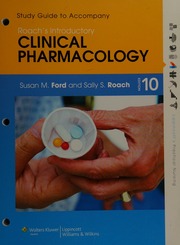
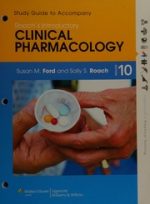

The Nursing Foundation: Roach’s Introductory Clinical Pharmacology (10th Edition)
The doctor writes the prescription, the pharmacist verifies it, but the nurse is the final line of defense. The nurse is the one who physically injects the drug, monitors the crashing blood pressure, and watches the patient’s face for the first terrifying signs of anaphylaxis. Roach’s Introductory Clinical Pharmacology (10th Edition) is the definitive, highly accessible survival manual designed specifically for this critical role. For nursing students (RN/LPN) and active floor nurses, this volume strips away the hyper-complex biochemistry and provides the absolute, high-yield clinical data required to administer medications safely and flawlessly.
Demystifying Complex Medical Chemistry
The opening premise of this textbook is absolute clarity. The authors understand that nursing students are overwhelmed. The text aggressively translates dense pharmacological theory into highly readable, immediately applicable clinical knowledge. It does not force the student to memorize the atomic structure of a drug; it forces them to memorize exactly what that drug will physically do to their patient in the next five minutes.
The Nursing Process and Safe Medication Administration
The core of the book provides a masterclass in the “Nursing Process” (Assessment, Diagnosis, Planning, Implementation, Evaluation). The authors deeply integrate this framework into every single drug chapter. Before giving a beta-blocker, the nurse must “Assess” the heart rate. After giving it, they must “Evaluate” the blood pressure. This highly structured methodology guarantees that the nurse is actively managing the therapy, not just blindly following orders.
Clear, High-Yield Drug Class Breakdowns
This is a fiercely organized clinical reference. The book groups thousands of drugs into highly logical classes (e.g., Antihypertensives, Diuretics, Antidepressants). For each class, the text provides a clear, bulleted summary of the “Mechanism of Action,” the primary uses, and the most common side effects. This allows the student to instantly recognize that a drug ending in “-pril” is an ACE inhibitor and will likely cause a dry, hacking cough.
Patient Education and Recognizing Adverse Reactions
The book pushes deeply into the nurse’s role as an educator. The authors provide exhaustive “Patient Teaching” summaries. They detail exactly how to explain to a patient that their new iron supplement will turn their stool black, or that they must never stop their steroid medication abruptly. Furthermore, the text provides massive, highlighted warnings for recognizing the very first signs of lethal adverse reactions, like Steven-Johnson Syndrome.
The “Five Rights” of Medication Safety
The final value of this textbook is its uncompromising dedication to safety. The authors relentlessly reinforce the “Five Rights” (Right Patient, Right Drug, Right Dose, Right Route, Right Time). The text explores the terrifying reality of medication errors, teaching the student how to navigate confusing, similar-sounding drug names, complex IV drip rate calculations, and illegible physician handwriting.
Frequently Asked Questions (FAQs)
Is the 10th edition current enough for the NCLEX?
While the foundational drug classes are timeless, nursing students must always supplement their studying with current NCLEX prep materials to ensure they are aware of the most recently approved drugs and updated FDA Black Box Warnings.
Does it cover pediatric and geriatric dosing?
Yes, it features highly specific “Lifespan Considerations,” detailing how aging kidneys and immature pediatric livers require massive changes in how a nurse monitors a drug’s effect.
Who is the primary audience?
It is the absolute, mandatory textbook for undergraduate nursing students (BSN/ADN/LPN) taking their very first pharmacology course.
Conclusion
Roach’s Introductory Clinical Pharmacology proves that brilliant nursing requires brilliant pharmacology. It is an indispensable tool for the chaotic hospital floor. By providing clear drug classifications, rigorous safety protocols, and a deep integration of the nursing process, this volume empowers students to confidently take the syringe in their hand, knowing they possess the knowledge to protect their patient’s life.