Perfecting the Solid State: Pharmaceutical Salts and Co-crystals
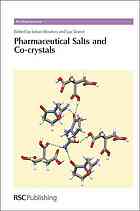
Discovering a chemical that cures a disease is only the first hurdle; the second, often more daunting hurdle, is turning that chemical into a stable pill that a patient can actually swallow and absorb. In modern drug discovery, over 70% of new drug candidates are practically insoluble in water, meaning they will pass straight through the human digestive tract without ever entering the bloodstream. Pharmaceutical Salts and Co-crystals is the definitive, highly advanced textbook that solves this massive formulation crisis. For solid-state chemists, formulation scientists, and pharmaceutical patent attorneys, this volume provides the master blueprint for manipulating the crystal structure of a drug to maximize its clinical efficacy and commercial value.
Overcoming Poor Drug Solubility
The opening chapters of this book tackle the “brick dust” problem—highly potent drugs that simply will not dissolve. The most reliable method to force a drug to dissolve in the watery environment of the human stomach is to convert it into a salt. The authors provide a rigorous physicochemical breakdown of the salt formation process. Readers will explore the complex acid-base chemistry required to react a basic drug molecule with an acid (like hydrochloric acid) to form a highly soluble, crystalline salt (e.g., Fluoxetine HCl).
The Science of Salt Selection
Choosing the correct salt is not guesswork; it is a high-stakes science. The book provides an exhaustive guide to the “Salt Selection” process. It details the rigorous high-throughput screening methods used to test dozens of different counterions (e.g., chloride, sulfate, mesylate) to find the perfect salt form that maximizes solubility without compromising the drug’s chemical stability or creating a pill that is highly hygroscopic (absorbs moisture from the air and turns into a useless paste).
Crystal Engineering and Polymorphism
The core of this textbook is a masterclass in crystallography and solid-state physics. It deeply explores the terrifying phenomenon of polymorphism—the ability of a single drug molecule to crystallize into several completely different physical structures. The book details the catastrophic historical case of the HIV drug Ritonavir, where an unexpected, less-soluble polymorph suddenly appeared during manufacturing, forcing the drug off the market. Readers will learn the advanced analytical techniques (like X-ray Powder Diffraction and Differential Scanning Calorimetry) required to rigorously characterize and control these crystal structures.
The Rise of Pharmaceutical Co-crystals
When a drug cannot be formed into a salt (because it lacks ionizable groups), chemists turn to the cutting-edge science of Co-crystals. The text provides a comprehensive breakdown of this advanced technique, where the drug molecule is crystallized alongside a safe, “co-former” molecule (like a vitamin or food additive) within the exact same crystal lattice. This brilliant feat of crystal engineering can massively increase the solubility and stability of a notoriously difficult drug without fundamentally altering its pharmacology.
Intellectual Property and Patent Life Extensions
This book is not just about chemistry; it is about billions of dollars in intellectual property. A novel salt form or a unique co-crystal of an existing drug can be patented. The final chapters explore the high-stakes legal strategies utilized by pharmaceutical companies to secure new patents based on solid-state discoveries, effectively extending the commercial lifespan of blockbuster drugs and defending against generic competition.
Frequently Asked Questions (FAQs)
Is this book highly theoretical or practical?
It is intensely practical. It is designed specifically for industrial scientists working in the “CMC” (Chemistry, Manufacturing, and Controls) divisions of pharmaceutical companies.
Does it cover the regulatory requirements for salts and co-crystals?
Yes, it details the specific FDA and EMA guidelines regarding how these novel solid forms must be tested, classified, and approved before they can be sold to the public.
Is a strong background in physical chemistry required?
Absolutely. A firm grasp of thermodynamics, acid-base equilibria, and crystallography is essential to fully understand the material presented.
Conclusion
Pharmaceutical Salts and Co-crystals is the ultimate guide to the hidden science of pill manufacturing. It proves that the physical, solid-state properties of a drug are just as critical to its success as its biological receptor affinity. By mastering the advanced crystal engineering techniques detailed in this volume, formulation scientists can rescue “un-druggable” molecules from the scrap heap, transforming them into stable, highly soluble, and commercially viable life-saving medications.