Mastering ADME: Pharmacokinetics in Drug Discovery and Development
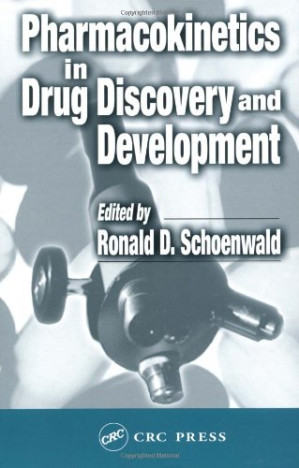
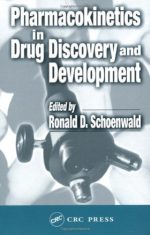
A brilliant chemist can design a molecule that perfectly cures cancer in a petri dish, but if that molecule is instantly destroyed by stomach acid or immediately filtered out by the kidneys, it will never become a pharmaceutical drug. The science of ensuring a drug actually survives the human body is called pharmacokinetics. Pharmacokinetics in Drug Discovery and Development is the definitive, mathematically rigorous textbook that bridges the gap between molecular design and clinical efficacy. For pharmacokineticists, medicinal chemists, and toxicologists, this volume is the ultimate guide to mastering ADME—Absorption, Distribution, Metabolism, and Excretion.
The Science of What the Body Does to the Drug
While pharmacodynamics studies what a drug does to the body, pharmacokinetics studies the exact opposite: what the body does to the drug. The opening chapters of this book provide a deep dive into the mathematical modeling of drug concentrations over time. Readers will master the fundamental equations of compartmental modeling, learning how to calculate the Area Under the Curve (AUC), clearance rates (CL), and the critical Volume of Distribution (Vd) that dictates exactly where a drug travels after it enters the bloodstream.
Absorption and Bioavailability Optimization
The Holy Grail of pharmacology is an oral pill. However, designing a drug that can survive the harsh, highly acidic environment of the GI tract and successfully cross the intestinal wall is incredibly difficult. This text details the Biopharmaceutics Classification System (BCS) and provides medicinal chemists with advanced strategies to manipulate a molecule’s lipophilicity (LogP) and pKa to maximize its bioavailability, ensuring that the maximum amount of the intact drug actually reaches the systemic circulation.
Distribution and Blood-Brain Barrier Penetration
Once a drug is in the blood, where does it go? The book rigorously explores the complex physics of drug distribution. It details the phenomenon of plasma protein binding (how drugs get trapped by albumin in the blood) and provides extensive chapters on the ultimate biological fortress: the Blood-Brain Barrier (BBB). Researchers will learn the exact chemical properties required to design a drug capable of slipping past the tight junctions of the BBB to treat neurological diseases like Alzheimer’s or brain tumors.
Hepatic Metabolism and CYP450 Interactions
The liver is the body’s primary detoxification center, and it views pharmaceutical drugs as poisons that must be destroyed. The core of the textbook provides a masterclass on hepatic metabolism, specifically focusing on the Cytochrome P450 enzyme system. It details the complex Phase I (oxidation) and Phase II (conjugation) reactions the liver uses to render drugs water-soluble for excretion, and teaches researchers how to design molecules that are metabolically stable enough to require only once-daily dosing.
Renal Excretion and Half-Life Calculations
The final phase of a drug’s journey is excretion. The text covers the physiology of the kidney, detailing glomerular filtration, active tubular secretion, and passive reabsorption. By mastering these concepts, researchers can accurately calculate a drug’s elimination half-life (t1/2), allowing them to design optimal dosing regimens (e.g., 500mg every 12 hours) that keep the drug’s concentration perfectly within the narrow therapeutic window—high enough to be effective, but low enough to prevent toxic overdose.
Frequently Asked Questions (FAQs)
Is this book highly mathematical?
Yes. A strong foundation in calculus and advanced algebra is absolutely required to fully utilize the pharmacokinetic modeling equations and interpret the complex logarithmic concentration-time graphs.
Does it cover in vitro to in vivo extrapolation (IVIVE)?
Absolutely. It details how researchers use data from early test-tube experiments (like liver microsome stability assays) to mathematically predict how a drug will behave in a living human being.
Is this relevant for biologics (like monoclonal antibodies)?
While primarily focused on traditional small-molecule drugs, modern editions include specific chapters addressing the unique, highly complex pharmacokinetic challenges associated with large protein therapeutics.
Conclusion
Pharmacokinetics in Drug Discovery and Development is an indispensable tool for the modern pharmaceutical scientist. It proves that biological efficacy is useless without pharmacokinetic survival. By mastering the rigorous mathematical and physiological principles detailed in this book, researchers can successfully navigate the treacherous ADME pipeline, transforming fragile chemical compounds into robust, highly effective, and flawlessly dosed pharmaceutical cures.