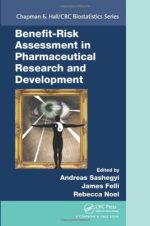

The Ultimate Calculus: Benefit-Risk Assessment in Pharmaceutical Research and Development
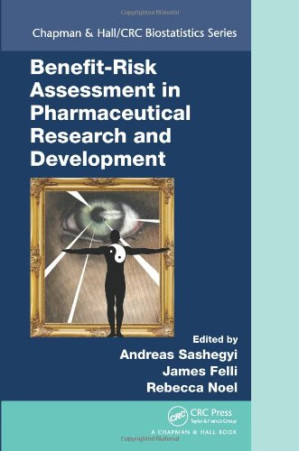
No pharmaceutical drug is perfectly safe; every single medication, from a simple aspirin to a massively complex targeted oncology biologic, carries a risk of harm. The fundamental challenge of modern drug development is not creating a safe drug; it is mathematically proving to a government regulator that the drug’s potential to save a life drastically outweighs its potential to end one. Benefit-Risk Assessment in Pharmaceutical Research and Development is the definitive, highly advanced textbook exploring the complex statistical and regulatory frameworks used to make this impossible calculation. For regulatory affairs executives, biostatisticians, and pharmaceutical executives, this volume provides the absolute blueprints for defending a drug’s safety profile to the FDA.
Beyond Basic Efficacy: The Framework of Medical Decision Making
The opening chapters of this book obliterate the simplistic notion of “safe vs. unsafe.” The authors establish that benefit-risk is a highly dynamic, entirely context-dependent calculation. A drug that causes severe liver damage in 5% of patients is absolutely unacceptable if it is meant to treat a mild headache; however, that exact same drug is considered a miraculous, highly approvable triumph if it cures a terminal brain cancer that has a 100% mortality rate.
Quantitative Benefit-Risk Analysis Methodologies
The core of the textbook moves past qualitative “gut feelings” and dives deeply into hardcore mathematics. It provides a masterclass on the advanced statistical frameworks required by modern regulatory agencies. Readers will explore the complex architecture of Multi-Criteria Decision Analysis (MCDA)—a highly structured, mathematical methodology used to assign specific numerical weights to a drug’s benefits (e.g., increased survival time) versus its risks (e.g., increased risk of stroke), generating a single, objective “Value Score.”
Navigating FDA and EMA Regulatory Requirements
This is a fiercely pragmatic regulatory survival guide. The authors provide exhaustive analysis of the FDA’s “Structured Benefit-Risk Framework.” They detail exactly how a pharmaceutical company must organize their massive clinical trial data sets (often millions of pages) to perfectly align with the FDA’s strict matrix, ensuring that the regulatory reviewers can clearly see the mathematical justification for approving the drug.
Post-Market Surveillance and Dynamic Risk Management
The assessment does not stop when the drug is approved. The text heavily explores the concept of the “Lifecycle” benefit-risk profile. It details the massive pharmacovigilance networks required to constantly monitor the drug once it is prescribed to millions of people in the real world. The authors explain how a sudden spike in rare adverse events can instantly flip the mathematical equation, forcing a company to issue a “Black Box” warning or immediately pull a blockbuster drug from the market.
Patient Preference and the “Voice of the Patient”
The final chapters explore a massive paradigm shift in regulatory science: incorporating the patient. The book details the advanced sociological and statistical tools used to mathematically quantify exactly how much risk a terminal patient is personally willing to accept in exchange for a few more months of life, proving that the FDA is no longer the sole arbiter of acceptable risk.
Frequently Asked Questions (FAQs)
Is this a textbook on biostatistics?
While it heavily relies on statistics, it is fundamentally a regulatory strategy and decision-science textbook. It bridges the gap between the math generated by the statisticians and the clinical arguments made by the regulatory executives.
Does it cover the use of “Real World Evidence” (RWE)?
Yes, it features critical updates on how the FDA is increasingly allowing companies to use massive, real-world hospital databases (EHRs) to continually prove a drug’s safety long after the clinical trials have ended.
Who is the primary audience?
It is essential reading for Chief Medical Officers, Vice Presidents of Regulatory Affairs, and FDA/EMA regulatory reviewers tasked with making billion-dollar approval decisions.
Conclusion
Benefit-Risk Assessment in Pharmaceutical Research and Development is an indispensable guide to the most high-stakes calculation in modern science. It proves that drug approval is never a simple “yes” or “no.” By mastering the advanced quantitative frameworks and strict regulatory strategies detailed in this volume, pharmaceutical leaders can successfully prove the value of their innovations, ensuring that life-saving medications reach the patients who desperately need them.